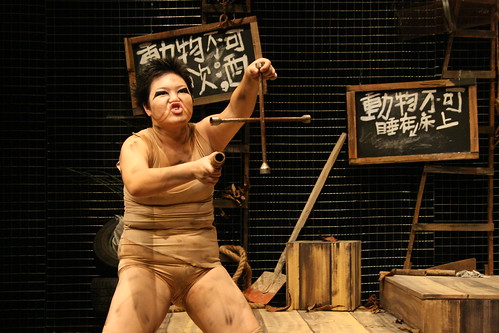
July 10, 2010

動物、物質、角色塑造與小丑 表演工作坊

動物、物質、角色塑造與小丑
表演工作坊
指導老師: 馬照琪 (臺灣)
「平台劇場工作坊系列 005」


主辦單位: 平台計劃

日期/時間:

2010 年 9 月 9 日(星期四)1900﹣2300 (四小時)
2010 年 9 月 10 日(星期五)1900﹣2300(四小時)
2010 年 9 月 11 日(星期六)1500﹣1800及1900﹣2200(六小時)
2010 年 9 月 12 日(星期日)1100﹣1400及1500﹣1800(六小時)

工作坊地點:
吉隆坡表演藝術中心 / KLPac, Studio 5
工作坊人數:
預計招收20人(學員)5人(旁聽)
工作坊對像:
演員、導演及戲劇訓練導師等

工作坊收費:
RM 380 (20小時)

聯絡方式:
012-607.1318/012-274.4292/012-266.1579
pentasproject@gmail.com

報名及繳費方式:
1. 有興趣可用電話或電郵和我們聯絡,之後我們將會把報名表格寄到你的電郵信箱。
2.報名後需在8月15日前繳交研習費。如沒在指定的限期內繳交研習費,主辦單位將有權力把名額轉讓給其他有興趣者。
3. 繳費方式:﹣
a.可親自把費用交給工作坊負責人
b. ATM轉帳付費或支票匯款。

銀行戶口名字:Pentas Project Theatre Production
銀行: Public Bank
帳號:3141760724
4.匯款後請用電話或電郵的方式和我們聯絡,以確 認您的姓名及匯款帳號。
5.請務必保留提款機列 印的收執聯或任何匯款回條,以做為相關證明。


課程內容:
關於角色塑造

在賈克樂寇表演體系中,肢體表現是重要的一部份。相對於一般認為所謂史坦尼表演法,認為表演是由內而外散發出來,賈克樂寇認為表演是由外而內。也就是說,一個角色的創造, 可以先由形體的摹仿與揣摩開始, 然後再由外而內, 慢慢建構角色的內在情感與精神狀態。

那麼, 要如何從外在進入到角色之中呢?賈克樂寇認為, 並不是要寫實的摹仿, 而是藉由對大自然、動物、物質等等動態的分析與摹仿, 進入到這些大自然的動態之中, 來試圖引發出一種情緒或是意象, 進而“創造“出一個戲劇人物。也就是說, 在這裡不是要講求“寫實性“的表演, 而是藉由模仿大自然的動態, 創造出一個“戲劇性“的角色。所以在這一次的工作坊當中, 我們將深入探討何謂“人類共通的詩意本質“(fonds poetique commun), 藉由對空間、光線、顏色、物質、聲音等 等物質現象, 產生感性的情感聯想, 接著, 我們再用肢體動作, 將這些無法言說的情感與動態, 用動作表現出來。藉由這樣的訓練, 我們可以慢慢進入到大自然萬物的動 態之中。比如, 風火水土、動物、物質…等等。用動態默劇(Mimodynamique)的方式, 將這些 元素用動作、方向、節奏、韻律等等表現出來。這裡我們要求的, 不是百分之百寫實的模仿, 而是用一種更詩意的方式, 將萬物的精髓與動態表現出來。

從動物的模仿出發, 我們可以慢慢進入到戲劇角色的塑造。從動物的動態引發出角色的走路與姿態, 進而讓人物個性的塑造更具立體感與戲劇感。

關於小丑

小丑是賈克樂寇學校兩年課程的最後一個單元。這也代表, 小丑所體現的, 是所有表演技巧之集大成。唯有真正俱有豐富經驗的表演者, 才有可能成為 好的小丑演員。

在這裡我們所只的小丑不是馬戲團或夜總會式的小丑, 而是以個性為主的戲劇式小丑。也就是說, 我們尋找的是以戲劇為表演形式的小丑。小丑表演的最終目的是讓人發笑, 但是如何讓觀眾發笑呢?就像賈克樂寇說的: “小丑只存在於扮演他的演員身上。我們全都是小丑,我們全都自認為英俊又瀟灑,聰明又強壯,但其實我們每一個人都有弱 點,都有各自愚蠢又可笑的地方;而當我們將它們表現出來時,觀眾就會發笑。“ 所以 , 戲劇式的小丑必須首先誠實的面對自己, 並且接受自己, 然後在舞台上放下一切的防備, 將自己的真實面貌呈現在觀眾面前。每一個演員都有屬於自己的小丑, 別人無法取代。而小丑表演最重要的是, 沒有一個小丑是要上台搞笑的, 他們的態度都是認真而嚴肅的, 他們的情感與表演也都是真實的。一個表演真實的小丑才會是好笑的。

課程內容大綱
暖身。音樂、文字、顏色練習。
中性面具動物動態分析與練習。
從動物到人類。角色創造練習。介紹紅鼻子。
尋找每個人的小丑。單人或分組的小丑即興表演練習。戲劇理論探討。
講師會隨著學員的吸收程度而作課程節奏上的調整。

賈克樂寇表演體系與 小丑示範講座

主辦單位: 平台計劃
日期/時間: 2010 年 9 月 8 日(星期三)@ 7:30pm
演出地點: 仁生劇場

入場免費

內容:

賈克樂寇的表演體系是從中性面具開始, 小丑結束。
他曾經說過, 中性面具代表的是一個沒有個人性的群體, 我們要追求的, 是所有人類之間的共通性。而小丑卻恰恰相反; 小丑代表的是個人性發揮的極致, 每一個小丑都不同, 他所強調的是每個個體的內在狀態。賈 克樂寇的訓練, 就是一個從追尋人類共同詩意特質開始, 到挖掘每個個體之獨特性為結束。在這樣的旅程當中, 又經歷了哪些階段?

本次的示範講座, 將就這個主題, 作深入的探討。同時也將配合影片賞析與動作示範。
有關賈克.樂寇 ( Jacques Lecoq, 1921-1999)

當代最具啟發性的戲劇教師。二次大戰時期為運動員及物理治療師時,開始了對於身體結構與運動方式的研究。1948年前往意大利,擔任戲劇老師與劇場導演。 1952年他與朋友共同創立了位於米蘭的皮可羅劇團 (Piccolo Teatro)戲劇學校。1956年他回到巴黎,成立了著名的默劇與戲劇國際學校 (Eecole International de Mime et de Theatre)。賈克樂寇對於人類肢體語言之研究具有極大的興趣,但是他排斥僅局限於傳統啞劇與純粹模仿的狹義默劇。藉由意大利即興喜劇的啟發,他開發 出戲劇肢體的新的可能性並且不再將語言屏除在外,同時也發展出對個性小丑的研 究,以及面具的表演技巧,並於世界各地主要戲劇節主持戲劇研習營與工作坊。
__________________________
馬照琪簡歷
馬照琪

沙丁龐客劇團團長 / 劇場編導、演員 / 表演老師、中 英法翻譯。
1997年台灣大學經濟系畢業,在校期間即參與台大話劇社演出及製作。
1999得到紐約大學教育劇場系(Educational Theatre, NYU)碩士,並參與倫敦及愛丁堡社區劇場及教室劇場工作研習營。2001年畢業於巴黎賈克樂寇國際戲劇學校(École internationale de théâtre Jacques Lecoq),專研默劇、小丑、體操、義大利即興喜劇、希臘悲劇、中性面具、半臉面具、通俗劇、即興、丑角(Bouffon)等,同時接受導演與編劇的訓練。翻譯作品:由賈克樂寇所著之表演理論書籍詩意的身 體(Le Corps Poétique),於2005年2月由桂冠書局出版。2002年回國後參與許多大小劇團的製作,擔任演員。之後於2004年推出首度編導作品—異境詩篇(莎妹劇團,紅樓劇場)。2005年初成立沙丁龐客劇團,於2005年底推出自編自導自演創團作—《在世界的房間》(國家劇院實驗劇場),並入選文建會出國巡演計畫參加2007年法國亞維儂戲劇節。2007年推出自導自演女丑獨角戲《一個人的晚餐》,並於2008年再度入選文建會計畫前往法國亞維儂藝術節演出一個月。2008年編導兒 童劇《馬穆與精靈》參加社教館兒童劇演出以及台北兒童藝術節,大受家長與兒童好評。馬照琪大部分時間投入戲劇教學與編導演的工作。曾任春禾表演班講師。莎妹劇團戲劇課程老師及翻譯,復興高中戲劇班畢製編導,社教館文山分館兒童戲劇課程講師,目前為臺北藝術大學戲劇系兼任講師,台灣藝術大學戲劇系兼任講師,並不時受邀出國主持短期戲劇工作坊。__________________________________________


Clown and the creation of animals, materials and character
Performing Workshop

Instuctor: Ma Chao Chi (Taiwan)
** Workshops will be conducted in Mandarin & English

Organized by: Pentas Project Theatre Production
Date/Time:
9 September 2010 (Thursday)1900 – 2300 (4 hours)
10- September 2010(Friday)1900 – 2300 (4 hours)
11 September 2010(Saturday)1500 – 1800 and 1900 - 2200(6 hours)
12 September 2010(Sunday)1100 – 1400 and 1500 - 1800(6 hours)

Workshop Venue:
Kuala Lumpur Performing Arts Centre / klpac, studio 5
Number of Participants: 20 participants + 5 observers
Target participants:
Actors, Directors, Drama teachers etc.
Fees : RM 380
Contacts :
012-266.1579 / 012-274.4292 / 012-607.1318 / pentasproject@gmail.com

How to apply and paying application fees :

1. If you are interested, please e-mail or give us a call, we will then e-mail an application form to you.
2. Please complete the application form and e-mail it back to us. The workshop fees must be paid before 15th AUGUST. If payment is not received in time, the organizer has the right to cancel your application.
3. Payment :-
a) Pay cash directly to the person in charge of the workshop
b) Bank directly into our account or write us a cheque
Account Name : Pentas Project Theatre Production
Bank : Public Bank
Account Number : 3141760724

4) After banking in, please notify us via phone or e-mail details of your name and deposit numbers.
5) Please keep the deposit slip for further confirmation.


Workshop Content:
About the shaping of Character

In the performing system created by Jacques Lecoq, physical movement is one important element. As oppose to the Stanilavsky performing system that emphasize on the fact that performing is from in to out, Jacques Lecoq believes that performing is from out to in. The creation of one character starts from the creation and imitation of physical movement and appearance, and slowly moving from outer physical presentations to establishing the inner feeling and state of mind of the character.

How do we then enter the character? Jacques Lecoq thinks that an actor/actress need not imitate realistic character, but through analyzing the movement of nature, animals or materials, one will go into the movement of nature and try to initiate an emotion or metaphorical representations, and eventually creating a theatrical character. Jacques Lecoq does not emphasize on performing realistically, but to create a theatrical character through imitating the movement of nature.

Hence in this workshop, we will explore deeper what is the “common poetic essence of human being” (fonds poetique commun), creating sentimental imagination follow by using physical movement to present unspeakable feelings and movement, through space, light, color, materials sound and others material phenomena.Through these trainings, we will slowly moving into the movement of nature, for instance wind, land, water and fire, animals, materials etc. These elements will be presented by using the method of Mimodynamique, , through movement, sense of directions, rhythm and tempo. Here, we do not require fully realistic imitation, but to use a more poetic way to present the spirit and movement of exi sting nature.

We will slowly going into the creation of theatrical character by starting off with the imitation of animals. Through the movement of animals, we will be able to initiate the way of walking and body gesture of the character, hence creating a more solid and more theatrical character.

About Clown

Clown is the last chapter of the 2 years programme of the Jacques Lecoq school training. This also signifies that, clown is actually the combination of all performing skills. Only performer with rich performing experience can be a good clown performer. The clown we mean here is not clown that are seen in circus or night clubs, but theatrical clown that has a character. We are searching for clowns that utilize drama as a performing form. The aim of clown performance is to let people laugh, but how to make people laugh? Like what Jacques Lecoq once said, “ Clown only exist inside the body of the performer who performed . We are all clowns. We thought we are handsome and charming, smart and strong, but actually w e all have weaknesses and things that are stupid and dumb. And when we performed that all out, audiences will laugh“.。Hence, theatrical clown must confront himself/herself honestly, and acceptinghimself/herself. Then he/she can put down all the barriers on stage, and presenting the true self to audiences. Every performer has a clown of his/her own, no one can replace it. The most important thing of clown performance is that no clown wants to play fool on stage, they are all serious. Their feelings and performance are real, only a clown that perform the true self will make people laugh.

Workshop content

1. Warm up.
2. The practice of music, words and color.
3. Neutral mask.
4. Analyzing and practicing animal movement.
5. From animal to human.
6. Practicing creating character.
7. Introduction to the red nose.
8. Searching for everyone’s clown.
9. Improvisation of clown (individual or group)
10. Exploring the theories.

The instructor will adjust the rhythm of the course based on the development of the participants.

__________________________

The Jacques Lecoq Training MethodPerformance Lecture

** will be conducted in Mandarin

FREE ADMISSION


Organized by:Pentas Project Theatre Production
Date/Time:8 September 2010 (Wednesday) @ 7:30pm
Venue: Yan Sang Theatre, Shaw Parade Changkat Thambi Dollah, 55100 Kuala Lumpur

About Jacques Lecoq (1921-1999)


Jacques Lecoq was born in Paris on December 15, 1921. In 1937 he began studying physical education and sport which he taught from 1941 to 1945, gaining teaching diplomas from the French athletics and swimming federations. His interest in physical education brought him into contact with Jean-Marie Conty, a master of physical education and friend of Antonin Artaud and Jean-Louis Barrault. By 1945 Jacques Lecoq had started acting with Gabriel Cousin and the two founded a drama group. He was then taken on by Jean Dasté as part of a theatre company known as the "Comédiens de Grenoble", where he was put in charge of the physical training and body movements of his fellow actors. Here he discovered masks and was introduced to the ideas of Copeau, to the point of later identifying with him as his indirect heir.

In 1948 Jacques Lecoq went to Italy where he settled for eight years. He staged his first pantomimes at the university theatre in Padua, while in the city markets he discovered Commedia dell'Arte. He met the sculptor Amleto Sartori and together they embarked on research into masks, ultimately leading to joint projects including, inter alia, the "neutral mask". Invited by Giorgio Strehler and Paolo Grassi, he joined them for the launching of the school at the Piccolo Teatro in Milan. Later ventures included work as a director and choreographer, working together with figures such as Dario Fo, Franco Parenti, Luciano Berio and Anna Magnani, pursuing the quest for new movements suited to contemporary music, reviews, opera, and devising movements for choruses in Greek tragedy in Syracuse.

In 1956 he came back to Paris and opened his School of Mime and Theatre. At the same time he set up his own theatre company, worked at the T.N.P. (National Popular Theatre) with Jean Vilar, and also on television, but before long the school had expanded and he devoted all his efforts to teaching.

From 1968 to 1988, Jacques Lecoq was a teacher at the French school of fine arts (Ecole Nationale Supérieure des Beaux-Arts) where he developed a teaching programme on architecture based on the human body, movement and the "dynamics of mime". In 1977 he founded the stage design department of the school, known as LEM (Laboratoire d'étude du mouvement — movement research laboratory). Jacques Lecoq was a member of the Union of Theatres of Europe, touring the world as guest teacher and speaker, giving master-classes and lectures, including the performance lecture entitled "Tout Bouge" [Everything Moves].

Permanent video records were made by Patrick Lecoq in 1983. In 1997 and 1998, Jacques Lecoq worked in close partnership with Jean-Gabriel Carasso, Jean-Claude Lallias and Jean-Noël Roy, ultimately producing the book "Le Corps Poétique" and producing two 45-minute documentaries for French television.

Only a few days before his death, on January 19, 1999, Jacques Lecoq was still teaching at the school.

________________________________________

About the InstructorDirector : Ma Chao-chi
Theatre director / actress / theatre teacher


Professor of National Taiwan University of Arts and of Taipei National University of Art

After having finished her studies in Humanity and Economy at National Taiwan University, Ma Chao-chi has decided to fallow a professional theatre study at the Educational Theatre program at New York University and then went on studying at the International School of Theatre Jacques Lecoq at Paris where she learned Mime, Acrobatics, Masks, Clown, and physical theatre.

In 2002, she made a tour in east and central Africa with Company Imibala where she performed in a street theatre. She has also given theatre workshops to children and artists in the counrties where they performed.

She then returned to her native country, Taiwan (Repiblic of China), in 2003, and created her own company « Theatre de la Sardine » in 2005 where she tries to find a new forme of popular theatre by mixing the street theatre, mime, masks, clown, theatre of objects, dance, and acrobatics.

She transtated the book « Le Corps Poétique » by Mr.Jacques Lecoq from French to Chinese, published by Laurel Publishing Company, Taiwan in 2005.

She is also professor of the theatre department in National Taiwan University of Arts and of Taipei National University of Art.

Educational background :
1997 Graduated from National Taiwan University in Economy.
1998 Graduated with a « Master of Art » degree from Educational Theatre program in New York University.
2001 Gradualted from the International School of Theatre Jaques Lecoq after completed 2 years of study.

Directory works :
2009 « Underground », National Experimental Theatre, Taipei
2008 « Mamou and the fairies ». Taipei Children’s Theatre.
2007 « Dinner for one », Avant Garde Theatre of Guling St., Taipei
2006 “e4kids », Taiwan Public Television Service
2006 « Love story of a clown », Ringside Restaurant, Taipei
2005 « Folle Parade », Esplanade du Theatre National, Taipei
2005 « Alone in the world’s room », National Experimental Theatre, Taipei
2004 « A Clown’s Poetry », The Red Theatre, Taipei.

Supported by

June 25, 2010

平台新導演計畫

平台新導演計畫

2010年開始不久,平台計畫的其中一位成員,著名舞台設計師、建築師、室內設計師、攝影師、劇場工作者,張忠勇先生離開了我們。他的離開,縱使悲傷,卻也更讓平台計畫意識到,培育劇場新人的重要性。

縦觀馬來西亞目前中文劇場的發展,除了中學生戲劇比賽以外,幾乎很少又機會看到新人導演的出現。雖然近一年來,從國外回流的戲劇系畢業生越來越多,但這些畢業生回來以後,卻鮮少有機會發揮自己的專長,更別論擁有一個發表自身作品的舞臺。

一座城市的人文涵養,以及一個國家的養成,有賴於藝術與文化的建設。平台計畫的成員多屬青壯輩。但平台計畫更樂于見到,馬來西亞的中文劇場,可以更百花齊放。年輕人的創意,很多時候是難以預估,難以想像的。

因此,平台計畫策劃了[平台劇場新導演計畫],希望能夠盡一點綿力,鼓勵更多年輕的創作人,或苦候多年卻等不到一個舞臺,蓄勢待發的創作人,能無後顧之憂地重新出發發表新的劇場作品。平台計畫希望能夠秉持著我們創團的理念,為藝術工作者提供一個開放的平台。


宗旨
1. 发掘更多本地剧场新导演。
2. 促进本地剧场的永续发展。
3. 为本地剧场和各艺术领域提供一个交流的平台。
4. 促进素质人文社会的养成。
5. 创造优质的艺术生态环境。

公开甄选:
  • 公开给18岁以上对戏剧创作有热诚的人士参加。
  • 参加者必须至少导演过两个剧场演出。
  • 每人可投最多两个演出计划。
  • 每个演出长度必须介于30分钟到45分钟。
  • 演出计划案必须以中文书写。演出计划案必须涵盖以下内容:剧名、演出形式、创作理念、演出大纲、参加「平台剧场新导演计划」的原因、导演与主要创作群履历、曾导演过的演出片段 (附在DVD 里)、剧本(如有)。
  • 演出不限内容,不限形式,可由投计划案者自由发挥自己的创意,唯不曾公开演出。
  • 呈交计划案截止日期:以电邮方式最迟于2010年7月30日寄至 pentasproject@gmail.com。
  • 平台计划将在以上截止日期一周内,公布复选面试名单。
  • 平台计划将在面试后的第二天,通过网络媒体公布获选的两个计划案,并以电邮和电话方式通知获选者。
  • 获选的两个计划案必须在2010年10月以内完成演出。
  • 每个获选计划案将获得RM1000 至 RM5000演出制作补助。

平台计划将提供以下协助:

  • 提供所有演出的技术支援。
  • 负责所有演出的宣传。
  • 提供演出场地。
  • 若有需要,协助安排排练场地。
  • 将不定期安排本地著名剧场导演以及设计师观看演出排练,给与意见。
  • 若有需要,平台计划可帮忙物色演员、设计师。
获选计划案的演出单位必须:
  • 自行负责/分配演出费以及布景道具制作费等。
  • 确保演出的良好素质。
  • 配合平台计划所安排的宣传活动。
  • 若获选者无法如期在期限以内完成演出,必须将演出制作补助全数退还。

Supported by HSBC

March 15, 2010

城失空想 The Lost And The Ecliptic


城失空想
THE LOST AND THE ECLIPTIC

Re-stage + Preview of International Tour

"One is gripped with endless fascination... Kok Man and his team have sketched our ugly, fractured, lovely Kuala Lumpur." - Zedeck Siew, Kakiseni


"One morning, he awakes and finds himself transformed into an orchid mantis. He stops at an orchid and pretends to be the orchid. There He remains unseen and undiscriminated. Resting, he is safe, out of human sight."

Using the metaphor of a camouflage insect, this performance draws us into the anonymous lives and private souls of our city. Your neighbour sings her prayers to her deity. When you hear her, do you pray along? Inside a box, a man dances by himself. When he dances with a girl, are they less alone? Their gates keep them safe inside, safe within these beautiful dreams and disguises.

“某一天早上,我一如往常的躺在床上,發現自己成了蘭花螳螂,是一種習慣「擬態」的昆蟲,停在蘭花上,假裝自己是一朵蘭花,不會被看見、不會被 討厭。在每一個停下來歇息的空間中,很安全的,沒有人發現牠。“通過昆蟲偽裝的隱喻,演出以“城市”為出發點,探討了“城市”這麼一個生存空間和劇場的相似性,發掘出城市裏頭人們的追求、孤獨、挫敗、幻想、不安、疑惑等錯綜複雜的情緒。

“城失空想”依循城市的主題脈絡,將劇場變成了一個充滿視覺和聽覺驚喜的魔幻空間,掀開一頁又一頁屬於城市的備忘錄,在逐步消失的過程中,回頭凝視我城。

2007年,劇場、舞蹈、裝置、音樂、影像、文字創作者,對城市的初表態,催生了《城失空想.一個殘缺不全支離破碎失憶症患者的十個備忘錄》。

2010年,紀念我們摯愛的創作夥伴張忠勇,我們再度反芻城市生活的種種姿態,寫下屬於我們和城市相濡以沫的十個備忘錄。

羅國文 loh kok man     director/lighting design
區琇詒 au sow yee       video artist/multimedia design
張忠勇 caecar chong    space design
黃楚原 ng chor guan    music composer
陳燕棣 tan yan tee        text collaborator
陳淑真 amelia tan        performer
劉銘 Ming Low           dance artist
shanthini venugopal     performer


「跨嶺域集體創作,城市的魔法詩意」

Kuala Lumpur
Thu 22 - sat 24 april 2010, 8:30pm
Sun 25 April 2010, 3:00pm
Pentas 2, Kuala Lumpur Performing Arts Centre (KLPac)
RM38 (Adult) / RM28 (students/seniors/disabled)
Box Office call or walk in: klpac box office @ Sentul Park - 03 40479000 & The Actor Studio @ Lot 10 - 03 21422009 / 21432009
walk in only: Axcess HQ (Jalan Semangat), 1-Utama & Alamanda Putrajaya | online purchase: www.klpac.com
Enquiries:(03)4047 9000/012-266 1579 / pentasproject@gmail.com
http://pentasproject.blogspot.com

Singapore
Fri 7 & Sat 8 May 2010, 8:00pm
Esplanade Theatre Studio
http://www.thestudios.com.sg/2010/

Supported by:
HSBC, KLPac & Colorganda!

Loh Kok Man | Director + Lighting Designer
Founder and artistic director of Pentas Project, Kok Man is an established theatre director, actor and lighting designer. He graduated from Malaysia Institute of the Arts in 1993. Since his performance "aku" in 1997, he had collaborated abroad in arts projects in Japan, Korea and India, as well as various interactive theatre festivals in the Phippines and Europe. In 2005, Kok Man establised Pentas Project, and was awarded a fellowship from "Asian Cultural Council" to New York City. He is currently lecturing in the Drama and Visuals Department of New Era College as well as an instructor for Hands Percussions.

His awards includes: "Best Director" & "Best Chinese Script" (2nd Annual Boh Cameronian Arts Awards), "Best Lighting Design/Dance" (5th Annual Boh Cameronian Arts Awards), "Best Lighting Design/Theatre" (6th Annual Boh Cameronian Arts Awards), "Best Director"`"Best Lighting/Theatre"`"Best Set Design/Musical" (7th Annual Boh Cameronian Arts Awards).

Caecar Chong | Space Design
Trained as an architect in Australia, the late Caecar Chong Chung Yong applied his skills and knowledge not on brickwork and steel structures, but experimentally through different art media and formats. Having established Space Spirit Studio, Caecar championed the use of multiple artistic disciplines as diverse as design, performance and visual art express the spirit of space. This grants a new lease of life to the classic ideological maxim that architecture is more than just about building buildings. Caecar was also a member of Pentas Project, a performer with butoh dance company Nyoba Kan and founder of Little Eyes Play House.

Ng Chor Guan | Music Composer
Guan studied music composition with Dr. Francois Evans and Dr. Peter Fribbins at the University of Middlesex in London. His work titled "String Quartet No.1" was performed by Trelawn String Quartet. He was also awarded Yamaha Asian Scholarship for Full-time Music Student. Since 2006 he actively composes original music for film, dance, theatre and multimedia projects, including: Antigone, Okiku, The Curse of the Forbidden Palace and Locked Report. He currently lectures in University of Malaysia, Yamaha Academy of Arts and Music and New Era College.

Au Sow Yee | Video Artist
A Masters in Fine Art graduate from San Fransico Institute of Art, Au Sow Yee is the Programming Director of Pentas Prject, a member od SICKL and also a lecturer in the Drama and Visuals Department of New Era College. Her work explores light and projected images as organic elements in space and time. Recently she has been actively involved in making videos or video installations for theatre including Water Closet, Tunku:The Musical, The Curse of the Forbidden Palace, Locked Repot and many others. She was awarded the Krishen Jit Astro Fund for a film performance/installation in 2007. She has been an artist in residence of Taipei Artist Village, Taiwan(2007), and also the Visiting Artist in Residence at Liaison of Independent Filmmakers of Toronto (LIFT), Canada(2008/2009).

Ming Low | Choreographer + Dancer
Trained at the Central School of Ballet, London, under a scholarship, Ming Low then danced professionally with B.W. Tanz Kompanie in Germany and Dance Theatre of Ireland in Dublin. Moving back to London, he worked with MZT Dance Company, Ricochet Dance Company and The Featherstonehaughs & Cholmondeleys. During that time he also worked with Compagnie Anonyme in France. Ming c0-founded Bi Ma Dance Company in 1991, which toured extensively throughout Europe, Taiwan, Malysia, Japan, USA, Egypt and Eastern Europe. He performed with Bi Ma in pieces like "Beyond The Legend", "Four Gestures", "Sand", "Le dit de cheveus", "The Secret", "Chinese Takeaway" and "From Soho to Shinjuku". Relocated back to Malaysia in 2009. Ming has been involved in local dance productions "The Slave Princess" and "Siddharta-The Musical". He currently teaches freelance contemporary dance and Ashtanga Yoga.

Tan Yan Tee | Text
A member of Pentas Project, Tan Yan Tee graduated in 2004 from the National Taipei University of the Arts, where she was also the research assistant for the film graduate school. She has lectured in the Drama and Visual Department of New Era College and was editor for the magazines "XFUNS". Besides writing poetry, prose and the occasional novels, she is currently an arts journalist for Sin Chew Daily. Yan Tee is the winner of the 9th "Hua Zhong" Literature Award in peotry, one of the most prestigious Chinese literary awards in Malaysia.

Amelia Tan | Actor
Amelia graduated from the Theatre Training & Research Programme (Singapore) in 2006 as well as Malaysia Institute of Arts. She is actively involved in the development of the theatre education. She was recently seen on stage in XXX Rhapsodies, The Secret Souk, Fall in City, Lost Angel and many others. She currently lectures in the Drama and Visuals Department of New Era College and is the Administrative Director of TEA Theatre.

Shanthini Venugopal | Actor
Shanthini is the Director of The Jumping Jelly Beans Sdn Bhd. She is actively involved in the development of theatre education and children's theatre. She has acted in local drama series and films besides performing in local pubs. A regular actor with The Instant Cafe Theatre Company, she has been seen on stage in productions such as "Bolehwood", "Musical Chairs", "Vagina Monologue", "Millennium Jump" and may others.

December 12, 2009

NOH THEATRE 日本能劇

Organised by Pentas Project Theatre Production


Professor Richard Emmert 
A) PUBLIC LECTURE ON NOH THEATRE 能剧公开演讲 

A lecture introducing some basic concepts of Noh Theatre, accompany by screening of video documentation of actual Noh performance. 
此演讲将介绍能剧的一些基本概念,并以能剧演出的录影作为辅助。

Date + Time: 27th January 2010 (Wednesday) 11:00am to 1:00pm 
Venue: The Studio, PJ Live Arts (Jaya One, Petaling Jaya) 

Free Admission

B) NOH THEATRE DEMONSTRATION 能剧示范演出 

A Noh Theatre demonstration by Professor Richard Emmert following by a brief introduction of Noh Theatre. Richard Emmert 
教授将作一能剧的示范演出,并为观众简单地介绍日本能剧。 

Date + Time: 28th January 2010 (Thursday) 11:00am to 1:00pm 
Venue: The Studio, PJ Live Arts (Jaya One, Petaling Jaya) 
Free Admission 
Website: www.pentasproject.com | http://pentasproject.blogspot.com | http://www.jfkl.org.my 
Contact: pentasproject@gmail.com / 012-607.1318 / 012-266.1579

C) NOH THEATRE WORKSHOP 日本能剧工作坊 

The Noh workshop will be an introduction to the performance techniques of Japanese classical Noh theatre with special emphasis on movement and music. Two dances from Noh theatre will be taught as well as the singing to accompany these dances. Furthermore, the musical instruments and the masks used in Noh will also be demonstrated and discussed. Finally, several videos of Noh performance will also be shown and discussed to give context to the workshops. 

日本能剧工作坊将带领参与者认识日本传统能剧的表演方法与技巧,并以动作和音乐为主要导向。参与者将能学习到能剧其中两支舞蹈和伴随这两支舞蹈的歌曲。除此以外,能剧所使用的乐器和面具也将在此工作坊进行获得讨论与示范。参与者也将能看到日本能剧的演出片段。 

Date + Time: 
27th January 2010 (wed) 7:30pm ~ 11:30pm 
28th January 2010 (thurs) 7:30pm ~ 11:30pm 
29th January 2010 (fri) 7:30pm ~ 11:30pm 
30th January 2010 (sat) 3:00pm ~ 6:00pm & 7:00pm ~ 10:00pm 
31st January 2010 (sun) 10:00am ~ 1:00pm & 2:00pm ~ 6:00pm 

Number of Participants: 20 participants 
Workshop Fees : RM 300 
Website: www.pentasproject.com | http://pentasproject.blogspot.com | http://www.jfkl.org.my 
Contact: pentasproject@gmail.com / 012-266.1579 

Supported by : HSBC in The Arts + The Japan Foundation Kuala Lumpur + KLPac + Colorganda!

How to register: 
1) If you are interested, please e-mail or give us a call, we will then e-mail an application form to you. 2) Please complete the application form and e-mail it back to us. The workshop fees must be paid before 10th January 2010. If payment is not received in time, the organizer has the right to cancel your application. 
3) Payment :- a) Pay cash directly to the person in charge of the workshop. b) Bank directly into our account or write us a cheque Account Name : Pentas Project Theatre Production Bank : Public Bank Account Number : 3141760724 
4) After banking in, please notify us via phone or e-mail details of your name and deposit numbers. 
5) Please keep the deposit slip for further confirmation. 

如何报名: 
1) 有兴趣者可用电话或电邮方式和我们联络,之后我们将把报名表格寄到你的电邮信箱。 
2) 报名后须在2010年1月10日前缴交学费,如没在指定的限期内缴交学费,主办单位有权利把名额转让给其 他有兴趣者。 
3) 缴交方法:可亲自把费用交给工作坊负责人或ATM转帐付费或支票汇款。 银行户口名称: Pentas Project Theatre Production 银行: Public Bank 银行户口号码: 3141760724 
4)汇款后请用电话或电邮的方式和我们联络,以确认您的姓名及汇款账号。
5)请务必保留提款机列印的收据或任何汇款回条,做为证明。


Professor Richard Emmert Richard Emmert has studied, taught and performed classical noh drama in Japan since 1973. He is a certified Kita school noh instructor, and has studied all aspects of noh performance with a special concentration in movement and music. A professor at Musashino University in Tokyo, he directs an on-going Noh Training Project. In summers, he leads the intensive three-week Noh Training Project in Bloomsburg, Pennsylvania sponsored by the Bloomsburg Theatre Ensemble. He has co-authored a series of Noh performance guides published by the National Noh Theatre in Tokyo. He has also led extended Noh performance projects in Australia, India, Hong Kong, the UK, the US, Canada, and most recently at the University of Hawaii, has composed, directed, and performed in eight English noh performances, and has released a CD entitled Noh in English by the Japanese Teichiku Records. He has also performed and/or directed several Asian multi-cultural performances including Siddhartha by Teater Cahaya performed in Kuala Lumpur in 2003. The founder and artistic director of Theatre Nohgaku, a company dedicated to performing noh in English, he has led performance tours of At the Hawk's Well and Pine Barrens and also toured in Crazy Jane. Richard Emmer 

教授从1973年开始在日本学习、教导并演出日本传统能剧。他是喜多派系能剧的指导老师,着重于能剧动作和音乐的研究。他是东京武藏野大学的教授,并领导一个长期进行的能剧训练计划。他也曾经在美国、澳洲、印度、香港、英国、美国以及加拿大等地教导能剧演出。Richard Emmert教授也曾是东京的国家能剧剧场所出版的指南书的共同作者。他创作了共8出的英语能剧,并发行了英语能剧的音乐光碟。他曾参与数个亚洲的多元文化演出,其中包括Cahaya剧团2003年在吉隆坡的演出“Siddhartha”。他也是能乐剧团的创始人与艺术总监。该剧团致力于发展英语能剧,并已在多国进行巡回演出。 

————————————————————————————————

能劇,是日本獨有的一種舞台藝術,是佩戴面具演出的一種古典歌舞劇。能劇在日本作為代表性的傳統藝術,與歌舞伎一同在國際上享有高知名度。日本國際著名導演鈴木忠志,也從日本傳統能劇當中尋找表演的身體性,開發出一套注重下半身的重心與腰部力量的表演身體訓練體系:「鈴木方法(Suzuki Method)」。鈴木忠志說:「能劇是步行的藝術」。 

日本的表演藝術總是給人一種危險但是有趣、壓抑而精準、簡單卻能量飽滿的印象。而且,最具象徵性的特點是,日本的表演藝術總是給人一種既前衛又傳統的矛盾印象。 

2010年,【平台計劃】再次啟動「劇場工作坊系列」邀請了國外的指導老師前來馬來西亞,與本土劇場工作者及有志於表演藝術的朋友作近距離的接處。 此次的活動獲得「吉隆坡日本文化協會」的大力支持,邀請日本「东京武藏野大学」的教授 Richard Emmert 來馬進行五天的的能劇工作坊、公開演講及示範演出。為本地有志表演藝術的朋友提供一個優質的充實機會。除了介绍我們能剧的一些基本概念,工作坊也将带领参与者认识日本传统能剧的表演方法与技巧,并以动作和音乐为主要导向。 引領大家去認識到從傳統藝能發展出的戲劇美學。 About Noh Theatre (english) 能劇是具有600多年歷史的日本傳統戲劇之一。 能劇作為日本古典戲劇,在室町時代以流傳的傳說、故事等為題材配以謠曲、舞蹈、伴奏而形成戲劇,是世界現存最古老的舞臺藝術。 能劇具有假面劇、音樂劇、化妝劇、歌舞劇、詩劇的要素,演員頭戴“能面”(能劇面具),身著絢爛豪華的裝束進行舞蹈。 演員有稱作“仕手”的主角和稱作“肋”的配角,能面只有主角佩戴而配角不佩戴。 能面也是能劇的代名詞,數量多達200多,大致分為老人、男人、女人、鬼神、怨靈和翁6種。能面原則上為木制。如果是表現非人類則在眼睛周圍貼上金屬塗成金色,好像眼睛在放光;翁面與其他面具不同,嘴巴上下分開而用帶子系上,所以具有下顎可動等特徵。 能劇不使用大型設置、大道具等,只由演員的舞蹈、發聲或謠曲、樂師演奏的曲子構成,推進劇情。 能劇舞臺由帶屋頂的6m見方的“主舞臺”、主舞臺左側延伸的走廊式“橋懸”,登臺前主角用於佩戴能面、裝束等的“鏡間”構成。舞臺用原色柏樹建成,沒有多餘的裝飾,地板下放入壇罐,重視聲音效果。 樂器只使用笛子、小鼓、大鼓和太鼓4種。 能劇多與狂言配套演出,多數情況下能劇分成前後兩場上演,兩場之間上演狂言。 與狂言是喜劇相反,能劇基本上是悲劇。 另外,與作為日本獨特的舞臺藝術而廣為人知的歌舞伎不同,能劇佩戴能面。 能劇歷史悠久,起源于散樂。散樂是古希臘假面劇通過絲綢之路與中國戲劇融合而成,在奈良時代傳入日本。之後,散樂與日本古代戲劇相互融合發展成“田樂”、“猿樂”,室町時代其中猿樂的樂者“觀阿彌”和“世阿彌”父子把猿樂作為戲劇不斷提高,發展成了能劇。 狂言和能劇合稱“能樂”,並作為“能樂”在2001年被指定為日本首個教科文組織世界無形遺產。 

English Noh---A Brief (and Biased) History 
Richard Emmert 
Theatre Nohgaku Artistic Director 

Theatre Nohgaku (TN) got its start in 2000 when I invited advanced students from my Noh Training Project workshops in Tokyo and Bloomsburg, Pennsylvania to gather for a week in Bloomsburg to work on William Butler Yeats' At the Hawk's Well, music for which I had composed in noh style in 1981 and which had several productions thereafter. I also invited several other English speakers who had also studied noh in Japan. These people gathered with the idea of attempting to see whether noh in English was both interesting for them and viable as an art form. 

Yeats and Noh 

The history of plays in English being called "noh" seems to have originated with Yeats when he wrote his At the Hawks' Well in 1916. He however did not use the style and instrumentation of the music of noh but used musicians who played music composed for the production by Edmund Dulac. 

And here immediately is what I consider a misunderstanding of what noh is. Noh plays cannot be considered in the same way as Shakespeare plays. A Shakespeare play might be done in many different ways and still be called a Shakespeare play. Noh however is more like opera. Taking the text of a Verdi or Mozart or Britten opera, discarding the music and performing it in another style other than opera, would make it difficult to call an opera. Perhaps one could call it a performance based on opera lyrics. But is it still a Verdi opera when the lyrics are just spoken? Is it still a Mozart opera if the text of Marriage of Figaro is done in the style of Beijing opera without Mozart's music? Is it still an opera if it is done in the style of noh? 

I personally don't think so. An opera is one which is done in a particular style that we recognize as opera. Likewise, a noh play (and perhaps "play" is misnomer---it is more a musical or dance-drama) is one which is done in a style that can be recognized as noh. A Mozart opera performed without Mozart's music in the style of noh is a noh performance. A performance using the text of the classical noh play Kiyotsune sung in the style of opera is not a noh play, but it is an opera. 

And for this reason, though Yeats called his play a "noh" play, it was, in my opinion, a Western musical performance whose text was influenced by noh. But it was not a noh play. That really had to wait until the Japanese noh scholar, Yokomichi Mario, made an arrangement for Hawk's Well in Japanese in 1949 with members of the Kita school performing, and then yet another version of it in 1965 with members of the Kanze school. Both of these so-called shinsaku or "new works" were in Japanese and have been performed occasionally since. In the noh world, these versions are considered noh plays, but doing a version using the original music by Edmond Dulac is not. 

On the other hand, the version I composed in 1981, followed both the Yeats English and the musical style and structure of noh. It was, to my knowledge, the first time that anyone had written strict noh music to go with the original English of Yeats' play. It was an English noh. 

Other English Noh 

Since Yeats, I can imagine that there might have been others who have written texts influenced by noh, and likely even called them "noh plays." Of course, according to my perspective, they are not noh until they are done in the musical style of noh. 

One that came very close to being a noh performance was the play St. Francis, written by Arthur Little with music by Leonard Holvik. This was performed at my alma mater, a small Quaker liberal arts college in Indiana called Earlham College. In 1970 when I was in my second year of college, the two professors conducted a seminar on noh which I joined. The seminar commenced with reading noh texts in translation, listening to recordings of noh music and seeing the one film about noh that was available. We then began to rehearse the play in English which the two professors had created. The structure of the text followed closely some of the typical structures of classical noh. The music was meant to suggest noh, but was written so students not trained in actual noh musical techniques could still perform it. I was chosen to be the main actor, or shite, for the performances we gave, hardly imagining at the time that this was a first step in what would develop into a lifetime relationship with noh. 

It was only later when I went to Japan in 1973, that I happened to meet a young noh actor---Mr. Akira Matsui who has joined this tour---and decided to take lessons from him in the chant and dance. Later, I began taking lessons in the four noh instruments as well and developed an understanding of the music of noh, in particular the relationship between the drums and the text and how text and rhythm are so important in creating what we can call the style of noh. 

After studying noh in Japan from that time and even though I was told by several people that the music of noh developed from the Japanese language and therefore could not be done in other languages, I began to feel the typical rhythms of noh in my body. It wasn't a stretch for this native English speaker to begin to think of English text and how it fit with those noh rhythms. When Jonah Salz, a young American director based in Kyoto, asked me in 1981 to write music for a production of At the Hawk's Well that he was planning, it was easy to throw caution to the wind and to dive in and write music for the Yeats text in noh style. Performances followed in Kyoto, Osaka and Tokyo. Yokomichi Mario, the director of the earlier Hawk's Well versions in Japanese and my professor of noh music studies at Tokyo University of Fine Arts, told me at the Tokyo performances of our Hawk's Well, that my version was "too noh-like." On reflection, his complaint told me that I could have explored the noh style in a way which departed from typical classical noh structures, but it also seemed to clearly recognize, if there was still any doubt, that yes, noh can be performed in English. 

Over the next several years, I composed music for and directed and performed in several English noh. They were: 1) a Tokyo production of American Janine Beichman's play Drifting Fires, a story about space travelers in the distant future visiting the place where the planet "earth" once existed and there meeting the spirit of the last human being (1985); 2) an Earlham College production readapting St. Francis in a stricter noh style (1988); 3) a University of Sydney production of Australian Allan Marett's Eliza, a story of a British woman shipwrecked off the coast of Australia and forced to live with aboriginal people, and who in turn came to appreciate the unique sense of dream and time among them (1989); 4) a San Francisco Theatre of Yugen production of Crazy Horse by American Erik Ehn which collaborated with Native American performers to tell the story of the great Native American chieftain (2001—later retitled Moon of the Scarlet Plums for a 2005 Japan-US tour); 5) a Vancouver production of Canadian poet Daphne Marlatt's The Gull, a play about cultural identity issues of Japanese fishermen and their families along the British Columbia coast and touted in Canada as "the first Canadian noh" (2006); 6) a University of Hawaii production of my own English translation of the classical Japanese noh Sumidagawa. 

During the 1980s, there were two others in Japan who produced plays which can be considered English noh or at least noh-influenced English plays. First, Kuniyoshi Munakata Ueda, a Shakespeare specialist at Shizuoka University, began using noh with Shakespeare, notably Hamlet and Othello. Although the plays sometimes lacked a clear sense of the relationship between poetic text and drum rhythms that give noh its vitality and intensity, they did include chant and movement in noh style as well as noh musicians. And second, my good friend and now fellow member of Theatre Nohgaku, David Crandall, wrote and directed two plays, Crazy Jane and Linden Tree, both which had a strong noh structural feel in terms of text but employed his own musical composition for a Western instrumental ensemble and voices. 

Theatre Nohgaku and Its Work 

In the above list of English noh, you might have noticed the large gap between the noh plays I wrote music for in the 80s and the next one which didn't follow until 2001. It was in 1991 that I started an ongoing semi-intensive Noh Training Project in Tokyo, and then in 1995, a summer intensive Noh Training Project in Bloomsburg, Pennsylvania. After working on English noh in the 80s, it seemed clear that if it was to become viable, that it was necessary to have a group of trained native English speakers to make it happen. 

After years of workshops which planted these seeds, Theatre Nohgaku was born. We had our first tour in the United States in 2002 of Yeats' At the Hawk's Well. In 2003, we began an annual Writers' Workshop geared toward playwrights and poets interested in writing plays in the style of noh. In 2004, we collaborated with the Noh Training Project for its 10th anniversary performance in Pennsylvania of the classical noh Kurozuka in Japanese. In 2006, we toured TN member Greg Giovanni's Pine Barrens, a story of the so-called New Jersey devil said to roam the pine barrens of New Jersey. In 2007, we toured David Crandall's Crazy Jane which he readapted to be sung in noh style with a noh ensemble. And finally, earlier this year, we once again collaborated with the Noh Training Project for its 15th anniversary by performing the classical noh play Funabenkei in Japanese. 

This production of Pagoda in collaboration with the Oshima Noh Theatre is of course another step in our development as a company. But perhaps more importantly, it is another big step in making noh an accessible art form for the English-speaking world.


November 24, 2009

DELUSIONS 惑 KHAYALAN

Pentas Project Theatre Production Present's 平台計劃呈獻 
DELUSIONS 惑 KHAYALAN 


The Year In A Word 今年一字  Setahun Dalam Kata

Pentas Theatre Collaboration Project 2009 
平台劇場合作交流計劃2009 
Projek Kolaborasi Pentas Teater 2009

Can art reveal truth? Or is theatre just another delusion? 
藝術能否揭露真相?還是戲劇只是一個妄想? 
Mampukah Seni Mendedahkan Kebenaran? Atau Persembahan Teater Hanya Sekadar Khayalan?

Collaborators:
Amelia tan 陳淑真 + Anne James + Au Sow Yee 區琇詒 + Ayam Fared + Boyz Chew Soon Heng 周順興 + Eagle Lee Ming Kiat 李明傑 + Edwin Sumun + Hafizee Hatta + JacAl Map + Jo. Kukathas + Kirin Muhamad + Ling Tang 鄧壹齡 + Loh Kok Man 羅國文 + Low Shee Hoe 劉詩豪 + Mark Teh + Soon Choon Mee 孫春美 + Tin Tan Chai Chen 陳彩珍 

In 2006, Pentas Project initiated Pentas Theatre Collaboration Project, bringing together artists from different backgrounds to collaborate. The first critically acclaimed collaboration, “Break-ing 击破 (Ji Po) Ka Si Pe Cah” created a performance based on the theme “language”. The performance was well received and after its opening in August 2006 at the STOR Theatre (Dewan Bahasa dan Pustaka), the production toured internationally in 2008 to Japan and Singapore. December 2009 sees Pentas Theatre Collaboration Project bring 7 short pieces performanced by artists from diverse cultural backgrounds and art fields. This idea stems from Japan’s Kanji of the Year which was in 1995. Through discussions and various brainstorming sessions, the artists chose “delusions” as the word that reflects and represent the year 2009 in Malaysia. Each artist will use the word as a theme to create a 10-minute performance in any kind of media. They will explore and deconstruct “delusions”, bringing you different faces in a year which has been full of unexpected changes. 

2006年,本地劇團平台計劃開啟了劇場工作者合作的契機,集合了來自不同文化背景的3位導演,帶來了『Break-ing 擊破 Ka Si Pe Cah:平臺劇場合作交流計劃』。此演出也於2008年應邀前往日本東京以及新加坡交流。 2009年,平台計劃以日本的“每年漢字”作為發想的起點,邀請本地不同文化源流的劇場與藝術工作者,從交流當中選出了一個字,反映了他們對於2009年的馬來西亞的感想和反思,並以所選出的那一個字為演出的主題,各自發表為時10分鐘的演出。經過數次的討論,這群創作者以“惑”(Delusions/Khayalan)出發 。2009年是充滿疑惑、困惑以及迷惑的一年。小至個人以至更大的社會,離奇事件無限繁殖,電腦族群遷移到虛構的內在。2009年無疑惑影重重,以“惑”一字進行解剖拆解,創作出歷經萬千變遷的一年不同的面貌。 

Pada tahun 2006, Pentas Project memulakan Projek Kolaborasi Pentas Teater 2009, untuk mengeluarkan karya teater hasil daripada kumpulan artist yang terdiri daripada pelbagai latar belakang. Persembahan perdana projek tersebut adalah “Break-ing 击破 (Ji Po) Ka Si Pe Cah” yang bertemakan ‘bahasa’. Pementasan tersebut yang berlangsung di Teater STOR (Dewan Bahasa dan Pustaka) mendapat sambutan yang amat menggalakkan sehingga berjaya mengadakan persembahan lawatan antarabangsa ke Jepun dan Singapura pada tahun 2008. Pada Disember 2009, Projek Kolaborasi Pentas Teater mengumpulkan tujuh karya pendek hasil daripada para seniman daripada pelbagai latar belakang dan bidang. Idea tunjang projek persembahan tersebut berlandaskan Kanji of the Year negara Jepun (Karekter Perkataan Tahunan) yang telah bermula pada tahun 1995. Para artist mengambil keputusan untuk memilih karekter “Huo” (Khayalan) sebagai perkataan yang paling sesuai untuk mencerminkan situasi Malaysia pada tahun 2009. Setiap seniman bebas menghasilkan karya pendek selama 10 minit dengan bertemakan “khayalan” melalui pelbagai media persembahan. Ekplorasi dan de-konstruksi terhadap “khayalan” pasti akan membawa anda mengenali pelbagai wajah dalam tahun 2009 yang penuh dengan perubahan dan cabaran. 

Date + Time: 
17 to 19 December 2009 @ 8:30pm 
20 December 2009 @ 3:00pm & 8:30pm 

Venue: The Annexe Gallery 2nd Floor , Central Market Annexe, Jalan Hang Kasturi, 50470 Kuala Lumpur. 

Admission by Donation RM30(Adult) RM20 (student/maximum 30 pax per show) 
Box office: The Annexe Gallery +603-2070 1137 
Contact: 012-266.1579 / 012-511.7716 / 012-607.1318 pentasproject@gmail.com 
Website: http://pentasproject.blogspot.com www.pentasproject.com 
supported by : HSBC in the Arts | Krishen Jit- Astro fund | Annexe Gallery | Central Market | Colorganda!

October 30, 2009

SHOOT笑忘書

SHOOT笑忘書 ︱ a work in progress 創作半成品
**********************************************************

Performance Cancelled

October 9, 2009

藝術核爆.平台跨領域交流計劃(七)

藝術核爆.平台跨領域交流計劃(七)
Artom Bomb . Pentas Cross-Disciplinary Lecture Series VII

遷移中的聲色光影 Traveling Light
區琇詒的實驗電影+表演性電影
Experimental Film/Video and Performative Cinema of Au Sow Yee


區琇詒一直很神秘。一些人曾經看過她為劇場作的影像設計,卻從未看過她的個人作品以及背後啟動的機器,甚至不曉得這些影像背後創造者的名字。區琇詒覺得「沒有光就沒有電影」,而銀幕上的影像帶領觀眾進入一個幻象的世界,這一些,都得仰賴放映師的魔術能力。於是,她當過電影放映師,誓願成為製造詩意光影的魔術師。她的實驗電影不說故事,許多人或許不理解,或覺得這從來就是匪夷所思的事情,但從她看似抽象的影像當中,卻看到不斷遷移的魔術時光。 藝術核爆.平臺跨領域交流計劃(七)邀請您一起來感受區琇詒的魔術時光,以及一直讓她著迷的光學現象與活動影像悠遠的歷史。

Au Sow Yee is always “mysterious”. Some had seen her works for multimedia design in local theatre, but had never seen her personal works and the mechanics that triggered. Some do not even know the name of the person who created those visual images. Sow Yee believe that “there will be no film without light”. Images on screen lead audiences to a world of illusions and imaginations, and all these depends on the magical ability of the projectionist, to cast light over the remnants of life on the film strips. Therefore Sow Yee used to work as a projectionist, aiming to be a magician of light who create poetic moments. Her experimental film/video does not tell stories. Most people might not understand, or even think that this is something insane. But through her abstract images, we see some traveling magical moments. Artom Bomb . Pentas Cross-Disciplinary Lecture Series VII invites you to feel the magic hours of Au Sow Yee, and optical illusions and pre-history of moving images that attracts her for a long time.

Date & Time : 25th October 2009 @ 1:00pm
Venue : Old China Cafe

11, Jalan Balai Polis, 50000 Kuala Lumpur, Malaysia
联络:pentasproject@gmail.com / 012-266.1579/012-607.1318
樂捐入場 Entry by donation
網站:http://www.pentasproject.com/home.html
部落格:http://pentasproject.blogspot.com/

區琇詒 Au Sow Yee 馬來西亞實驗電影創作者。文化大學影劇系、美國舊金山藝術學院藝術創作研究所畢。目前為馬來西亞新紀元學院戲劇與影像系講師、劇團平臺計劃企劃,以及另類藝術工作室SicKL成員。她致力於探索光與影像作為空間和時間裏的有機元素,以及以影像發掘現實場域的抽象特質。她的創作橫跨錄像、實驗電影以及劇場影像設計。2007年獲Krishen Jit Astro Fund,並曾在臺灣、韓國、日本、義大利、美國等地發表實驗電影以及表演性電影作品。Experimental filmmaker and video artist based in Kuala Lumpur, Malaysia, Sow Yee is a MFA holder from San Francisco Art Institute and is currently a lecturer in Drama and Visuals Department, New Era College, Malaysia. She is also the Programming Director of Pentas Project Theatre Production (Malaysia) and member of Studio in Cheras KL (Malaysia).Her works explore light and projected images as organic elements in space and time as well as reveals the abstract quality of everyday live. Sow Yee was the recipient of the Krishen Jit Astro Fund in 2007, and have shown her experimental films/video and performative cinema series in Taiwan, Korea, Japan, Italy, USA etc. Her works span from experimental film/video, film/video performances to multimedia design for theatre.

Supported by : HSBC in the arts | Old China Cafe

September 25, 2009

戏剧表演工作坊

戏剧表演工作坊


表演不仅仅是一种天分,更是一项创意与习惯的行动,一项充满乐趣的行为,更是一种人性与哲学性的表现。学习表演不仅能帮助你认识自我,更可籍此发掘并建立你与他人及群体的关系。从初期的思考与判断的入门学习,以至进阶性的生动表演训练,可以帮助你培养并提升一名演员的敏感度、创造力与想像力;发掘你隐藏的表演天分。无论你是初学者或有经验的演员,透过实习,从新了解自己,震荡你大脑,激发想像,领悟人生、戏剧的秘笈与真谛。

课程内容
1)身体开发与训练(凝聚力、集中力、身体能量等)
2)发声与声音训练
3)表演的自信与喜悦
4)默契与交流
5)行动与舞台空间
5)即兴表演
6)小品/片段实习与演出呈现


导师:罗国文、邓壹龄
日期:11月4号开课
时间:星期三@7:30pm ~ 11:30pm & 星期日@10:00am ~ 2:00pm
节数:16堂课 (一星期两堂课,每堂课4小时)
地点:TBC
学费: RM 650
联络:pentasproject@gmail.com/012-607.1318/019-215.1890

如何报名:
1)有兴趣者可用电话或电邮方式和我们联络,之后我们将把报名表格寄到你的电邮信箱。
2)报名后须在10月25日前缴交学费,如没在指定的限期内缴交学费,主办单位有权利把名额转让给其他有兴趣者。
3)缴交方法:可亲自把费用交给工作坊负责人或ATM转帐付费或支票汇款。
银行户口名称: Pentas Project Theatre Production
银行: Public Bank
银行户口号码: 3141760724
4)汇款后请用电话或电邮的方式和我们联络,以确认您的姓名及汇款账号。
5)请务必保留提款机列印的收据或任何汇款回条,做为证明。


导师简介

罗国文,平台计划艺术总监。剧场导演、演员、舞台灯光设计师及剧场训练指导导师。
目前为手集团全职鼓手身体与创意开发导师,曾任教於新纪元戏剧与影像系。
1993年毕业於马来西亚学术学院戏剧系。曾荣获第三金马仑艺术大奖“最佳导演“奖、
第五届金马仑艺术大奖舞蹈组“最佳灯光设计“奖、第六届金马仑艺术大奖戏剧组“最佳灯光设计“奖、第七届金马仑艺术大奖戏剧组“最佳导演“,“最佳灯光设计“奖、及音乐剧组“最佳舞台设计“奖。2005年创立[平台计划],同年荣获美国“亚洲文化协会“奖学金赴美国纽约游学半年,也曾赴新加坡、菲律宾、印尼、泰国、日本、印度、美国及德国等地参与演出与交流。导演作品包括《aku》、《water closet》、《游戏时间》、《城失空想》、《[思想+自分]报告》及《动物农庄》等。


邓壹龄,毕业于北京中央戏剧学院导演系,2006年开始担任新纪元学院戏剧与影像系兼职讲师迄今,是编、导、演俱佳的多方位艺术工作者。除了积极参与剧场演出之外,也曾参与多部本土电视剧的编剧编审工作。导演作品包括《别为你的体重发愁》、《事情,。?!》、《逢场作兴》、《失乐园2001》、《较量》、《今夜不设床》等;表演作品则有《许三观卖血记》、《家》、《屏风》、《歌代啸》、《蠢货》、《绝代双华》、《Chup! Take a break》系列、《梁祝》、《游戏时间》及《动物农庄》等。

September 1, 2009

藝術核爆.平台跨領域交流計劃(六)


王嘉明 X 後現代創意絞肉機
劇場導演王嘉明的創作解密

一個常被戲劇圈或媒體標註為「鬼才導演」、「劇場頑童」的劇場導演,腦袋裡頭到底有什麼樣的魔鬼腦漿,可以翻轉攪動劇場觀眾的胃口,成為台灣近年最夯的小劇場導演? 是的,很多人都好奇,新生代劇場導演王嘉明的創意腦袋到底藏有多少格魔法抽屜,一拉開來就嘩啦嘩啦的倒出了許多通俗流暢的遊戲時光。鴻鴻評價他的創作時,曾以「後現代絞肉機」喻之,不管是什麼素材,王嘉明就是有辦法絞出一條條五彩繽紛且風格獨具的「王氏香腸」。 王嘉明的好玩幽默,以及他多年來在劇場形式內外跨界和多元的涉入、以及思考,值得本土創作人參照與凝視,藝術核爆.平台跨領域交流計劃(六)邀請您一起來啟動創意的絞肉程式!


藝術核爆.平台跨領域交流計劃(六)
王嘉明 X 後現代創意絞肉機
劇場導演王嘉明的創作解密

主辦單位:平台計劃
主講人:王嘉明
日期:2009年9月3日
時間: 8:00pm
地點:Old China Cafe
11, Jalan Balai Polis, 50000 Kuala Lumpur, Malaysia
联络:pentasproject@gmail.com / 012-266.1579/012-607.1318
樂捐入場
網站:http://www.pentasproject.com/home.html
部落格:http://pentasproject.blogspot.com/


王嘉明 (Wang, Chia-ming)簡介
1971年生於台北,國立台灣大學地理系、國立台北藝術大學劇場藝術研究所導演組畢業。現為「莎士比亞的妹妹們的劇團」團長,國立台北藝術大學與國立台灣大學戲劇系擔任講師。持續參與劇場創作與實驗十餘年,始終站在傳統與創新的邊緣,大眾與前衛的交界,作品不因通俗而失去批判力量,不因實驗而變成標新立異,照顧普羅大眾的同時,將文化美學向上提昇。

經歷
.2008年劇場作品《請聽我說─豪華加長版》獲2009年第七屆台新藝術獎年度十大表演藝術
.2007年劇場作品《殘, 。》獲2008年第六屆台新藝術獎年度十大表演藝術及評審團特別獎。
.獲美國編導Robert Wilson邀請,由文建會紐約文化中心贊助,參與位於紐約長島由Wilson先生親自主持的水磨坊藝術中心,2008國際夏日藝術村一個月的駐村計畫。
.2005-2006 獲「亞洲文化協會」獎助,赴紐約交流半年。
.2004-2005 獲教育部獎助,巴黎Cite des International Arts交流一年。
.2004年《Developing in Zodiac》所參與的高雄美術館策展【城市漂旅:釋放與失落】,該展覽獲選第三屆台新藝術獎年度七大視覺藝術。
.2002年劇場作品《Zodiac》獲選第一屆台新藝術獎年度十大表演藝術。


主要編導作品
.《膚色の時光》(2009,信義誠品展演廳)
.《請聽我說─豪華加長版》(2008,台北皇冠小劇場)
.《Plastic Holes》(2008,羅伯威爾森2008夏日水磨坊工作坊邀演)
.《羅密歐與茱麗葉—獸版》( 2008,台大戲劇系學期製作 )
.《R . Z》( 2008,國家戲劇院實驗劇場新點子藝術節 )
.《殘, 。》( 2007,國家戲劇院實驗劇場新點子藝術節 )
.《誘惑者日記》( 2007,香港牛棚藝術節 )
.《文生 梵谷》( 2006,誠品開放地下藝術節開幕戲 )
.《麥可傑克森》( 2005,國家劇院實驗劇場「瘋狂精英藝術節」開幕戲 )
.《Poi, Poison, Poisson》( 2005,巴黎藝術村畫廊 )
.《拜月計畫》( 2004,中秋節兩廳院戶外雜技演出 )
.《家庭深層鑽探手冊—我想和你在一起》( 2004, 國家劇院實驗劇場16軌聲音裝置 )
.《30P:不好讀》( 2003,誠品地下藝術節開幕戲 )
.《泰特斯—夾子/布袋版》( 2003,「莎士比亞在台北」藝術節開幕戲 )
.《請聽我說》(2002第八屆皇冠藝術節,2005青島藝術節邀請、2009北京演出)
.《Zodiac》(2007北京演出、兩廳院十五週年寶島地震帶系列開幕、2001第七屆皇冠藝術節)

藝術核爆源起
平台計劃成立3年以來,除了自身團員間的衝擊,交織出魔術游擊隊般的多元藝術交流量,2009年開始,平台也啟動「藝術核爆.平台跨領域交流計劃」,邀請各領域工作者參與交流、分享自身專業,希望藉由每月一次的跨領域藝術交流系列計劃,汲取跨界養分,達到開放交流、啟發、臨摹的學習成效,也為未來的合作奠基,讓藝術的光,在各領域工作者之間流動撞擊。

Supported by : HSBC in the Arts & Old China Cafe

June 3, 2009

藝術核爆.平台跨領域交流計劃(五)


《听见空气的色彩》
Colours in the Air

视而不见,
Seeing nothing
充耳不闻,
Listening to nothing
所以生活麻木不仁?
So your life is apathetic?

You're welcome to Old China Cafe at 3pm on 28th June. Joseph Foo, the Artistic Director of 3nity will recall the neglected images in your live, while Advertising Creative Director of AMP Radio Networks Hoe Kai Yew will touch your heart with words.

日期Date:28/06/2009
(星期日 Sunday)
时间Time:3:00 pm
地点Venue: old china cafe
11, Jalan Balai Polis, 50000 Kuala Lumpur, Malaysia
联络:pentasproject@gmail.com / 012-3669256/012-6071318
自由乐捐入场 Entry by donation. Talk is in Mandarin


胡智义
Joseph Foo
马来西亚三一设计顾问公司创办人.毕业于美国旧金山艺术学院,在美国和新加坡从事过设计工作。他希望把亚洲的思维和理念通过平面设计表达出来。特别表达灵魂的艺术。
“人与神”巡回展幕后主导人,一位思想与行动跨越国际领域的艺术工作者,讲师兼设计师。他的创作不断获得本地与国际的表扬。他热诚并活跃地在世界各地举办国际设计研讨会、工作坊与对话。


何开耀
毕业于马来亚大学理学院,主修数学,却凭着中文报馆助编及杂志美术员的工作经验闯入广告界。
1998年加入AMP Radio Networks,习惯从脑海中涌现的影画面获取创意灵感,却必须以声音打动消费者。处身以英语为主导的工作机构,唯有靠多项大马Kancil Awards、Air Awards、龙玺环球华文广告奖、时报世界华文广告奖及New York Festival来证明自己的创意。
2006年升任AMP Radio Networks创意总监,看管马来文、英文、中文及淡米尔文8大电台的广播广告创意。 不信奉什么广告教条,只认为广告应有基本道德操守,而参加奖项是为了证实创意细胞仍未死去的年度健康检验。


Artom Bomb project – Pentas Cross-disciplinary Lecture Series

Pentas Project, established three years ago, has since facilitated many collaborative creations among its residence members, successfully interweaving multidisciplinary artforms with elements of magic and surprise.

In 2009, Pentas Project started “Artom Bomb project - Pentas Cross-disciplinary Lecture Series”, and invites multidisciplinary workers in the domain of the arts to participate, interact, and share their own professional experiences and expertise. These series of talks or workshops will be held monthly.

This program is designed to promote interdisciplinary exchange, to acknowledge the importance nurturing of multi-disciplinary sharing, to achieve a platform for open and inspiring interaction, and to actively communicate in a situation of great diversity of learning methods, with new perspectives in order to pursue its own achievements. This program also lays the a foundation for future collaborations among its participants. The artists from these diverse professions are not solitary beings. They are always inspired and connected to each another.

藝術核爆.平台跨領域交流計劃
平臺計劃成立3年以來,除了自身團員間的衝擊,交織出魔術遊擊隊般的多元藝術交流量,2009年開始,平臺也啟動"藝術核爆.平臺跨領域交流計劃",邀請各領域工作者參與交流、分享自身專業,希望藉由每月一次的跨領域藝術交流系列計劃,汲取跨界養分,達到開放交流、啟發、臨摹的學習成效,也為未來的合作奠基,讓藝術的光,在各領域工作者之間流動撞擊。


Supported by